The Rats That Hoped
May 2026 4 min read
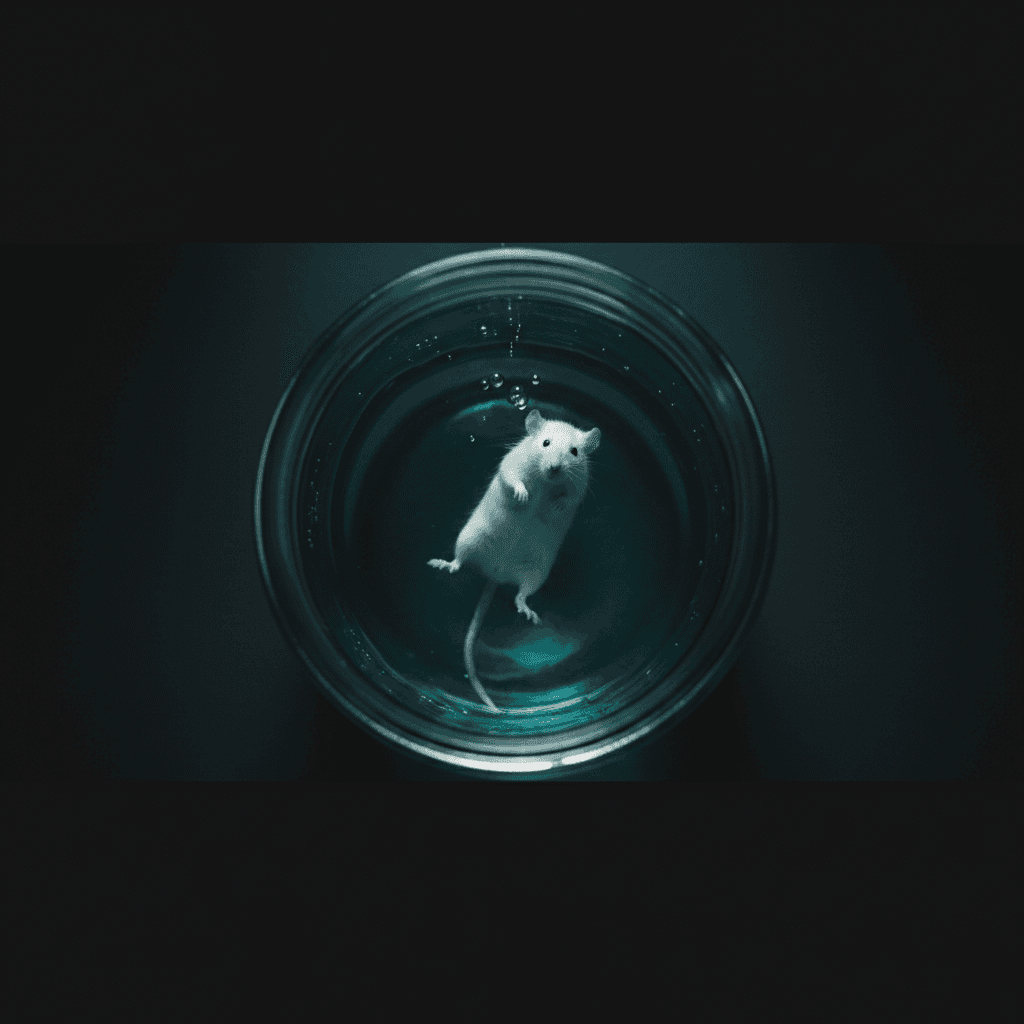
In 1957, a psychobiologist named Curt Richter put rats in jars of warm water and watched them drown.
Most gave up within fifteen minutes. They just stopped swimming. Richter noted it wasn't exhaustion — it happened too fast for that. They lost the will.
Then he tried something different. He rescued some rats just before they went under. Dried them off. Let them rest. Then put them back in.
Those rats swam for up to sixty hours.
Same jar. Same water. Same outcome waiting at the end. Just one difference: they'd been saved once, so some part of them believed it could happen again.
Everyone talks about this experiment as proof that hope is powerful. That belief extends survival. And fine, technically, yes.
But I keep getting stuck on the other reading.
The rats that gave up early — they suffered less. They reached the same destination faster and with less pain. The ones that kept going didn't get out. They just stayed in the jar longer, burning energy on a rescue that never came.
Hope didn't save them. It just made the suffering last.
I've been in situations where I held on because I was convinced something would change. A project that kept bleeding. A dynamic that kept taking. A version of events I kept believing in because I'd seen a glimpse of something good once, early on, and I couldn't stop reaching for it.
That one good moment was my rescue. And it kept me swimming long after I should have stopped.
I don't think I'm unique in this. Most people I know have at least one thing they stayed in too long — a job, a relationship, a direction — not because the evidence supported it, but because they remembered what it felt like when it briefly worked.
That memory is the jar. Hope is the thing that keeps you in it.
None of this means hope is bad. I'm not writing a case against it.
I'm writing about the specific version of hope that isn't really hope at all — it's just the refusal to accept a loss that already happened. The kind that dresses itself up as resilience so you don't notice you're still wet and treading water in the same place.
Real hope, if it exists, probably looks more like a decision than a feeling. A conscious choice to keep going with actual evidence — not just a memory of one time when things were okay.
The kind that asks: is there something real here, or am I swimming because I was saved once and I can't stop expecting it again?
The rats didn't know the jar had no exit.
Sometimes I wonder if knowing would've changed anything.